
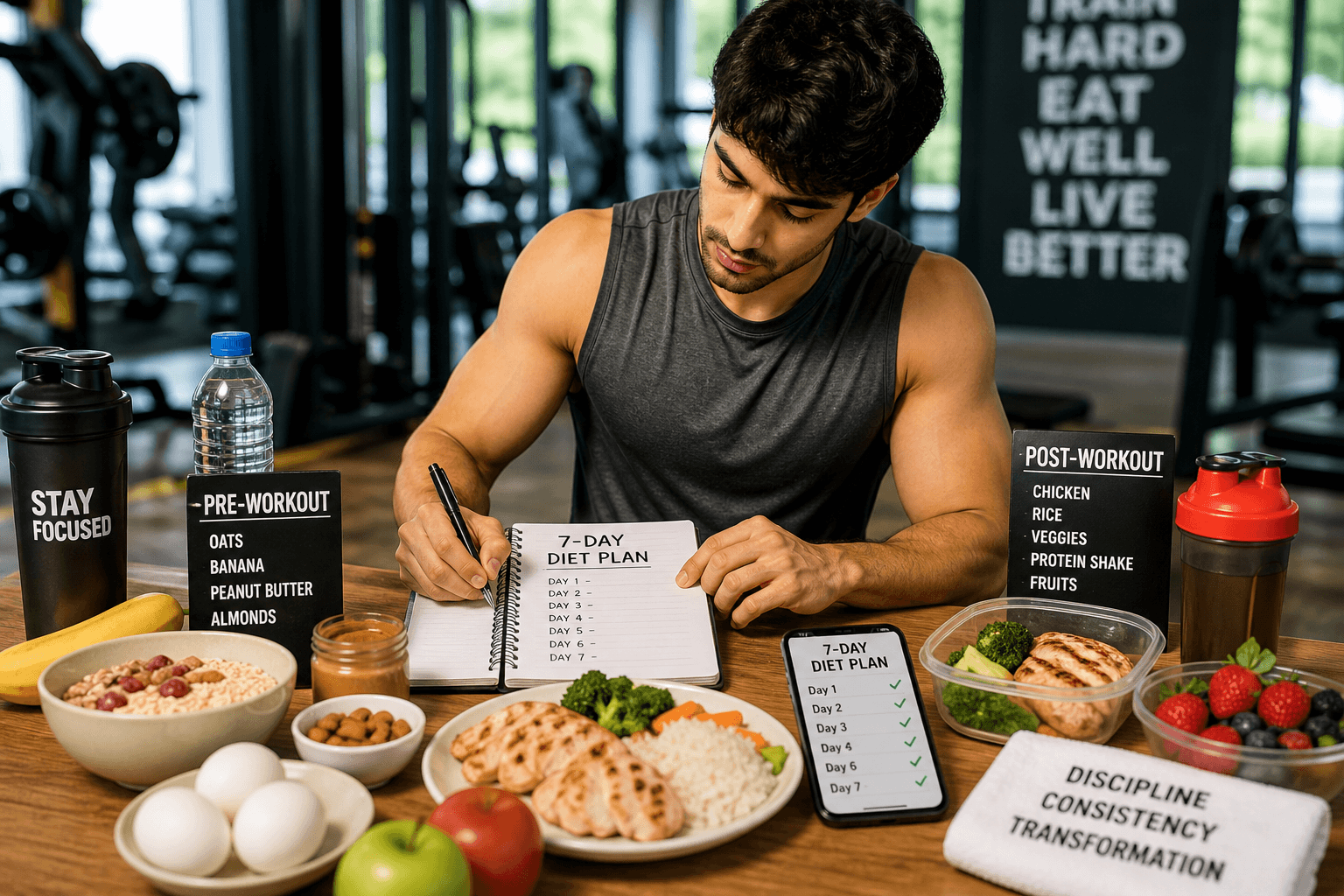
Starting the gym without a proper nutrition plan is one of the biggest reasons beginners fail to see results. Your workout only works if your diet supports it. That is why finding the best diet for gym beginners is essential, not optional.
A simple 7-day gym diet plan can help you build muscle, lose fat, and stay consistent. However, many beginners make one mistake. They focus only on workouts and ignore what they eat.
So here is the real question. Are you eating the right foods at the right time, or just guessing?
Let’s break it down in a simple and practical way.
Why a Structured Diet Plan Matters for Gym Beginners
A gym routine without proper nutrition is incomplete. Exercise creates the stimulus, but food drives the results.
According to nutrition research, muscle growth and fat loss depend on calorie balance and macronutrients. In other words, what you eat matters just as much as how you train.
A structured diet plan helps you:
- Maintain steady energy levels
- Support muscle recovery
- Avoid fatigue and burnout
- Improve workout performance
In addition, experts recommend that beginners consume 1.2 to 2.0 grams of protein per kilogram of body weight daily. This supports muscle repair and growth.
Core Principles of the Best Diet for Gym Beginners
Before following any plan, you need to understand the basics. These principles make your diet effective and sustainable.
1. Focus on Balanced Macronutrients
Your meals should include all three macronutrients:
- Protein: Chicken, eggs, fish, tofu
- Carbohydrates: Rice, oats, fruits
- Healthy fats: Nuts, seeds, olive oil
Protein helps build muscle. Carbohydrates provide energy. Healthy fats support hormones.
2. Prioritize Meal Timing
When you eat is just as important as what you eat.
- Pre-workout meals give you energy
- Post-workout meals help recovery
3. Stay Consistent
You do not need a perfect diet. Instead, you need a plan you can follow every day.
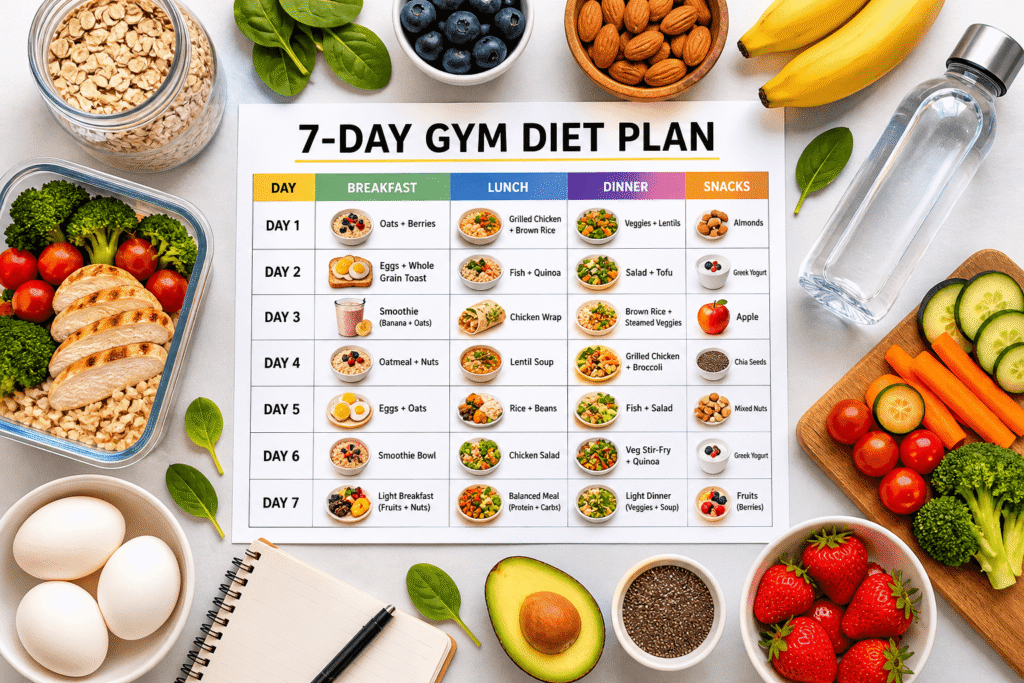
7-Day Gym Diet Chart for Beginners
This beginner-friendly plan focuses on simple meals and balanced nutrition. It is easy to follow and repeat.
Weekly Diet Overview
| Day | Breakfast | Lunch | Dinner | Snacks |
| Day 1 | Oats with fruits | Chicken with rice | Vegetables with lentils | Nuts |
| Day 2 | Eggs with toast | Fish with quinoa | Salad with tofu | Yogurt |
| Day 3 | Smoothie | Chicken wrap | Brown rice with vegetables | Fruit |
| Day 4 | Oatmeal | Lentil soup | Grilled chicken | Seeds |
| Day 5 | Eggs with oats | Rice with beans | Fish with salad | Nuts |
| Day 6 | Smoothie bowl | Chicken salad | Vegetable stir-fry | Yogurt |
| Day 7 | Light breakfast | Balanced meal | Light dinner | Fruit |
This structure keeps your diet simple. At the same time, it ensures you get all essential nutrients.
What to Eat Before a Workout
Eating before a workout improves performance. It also prevents early fatigue.
Best Timing
Eat 30 to 90 minutes before your workout.
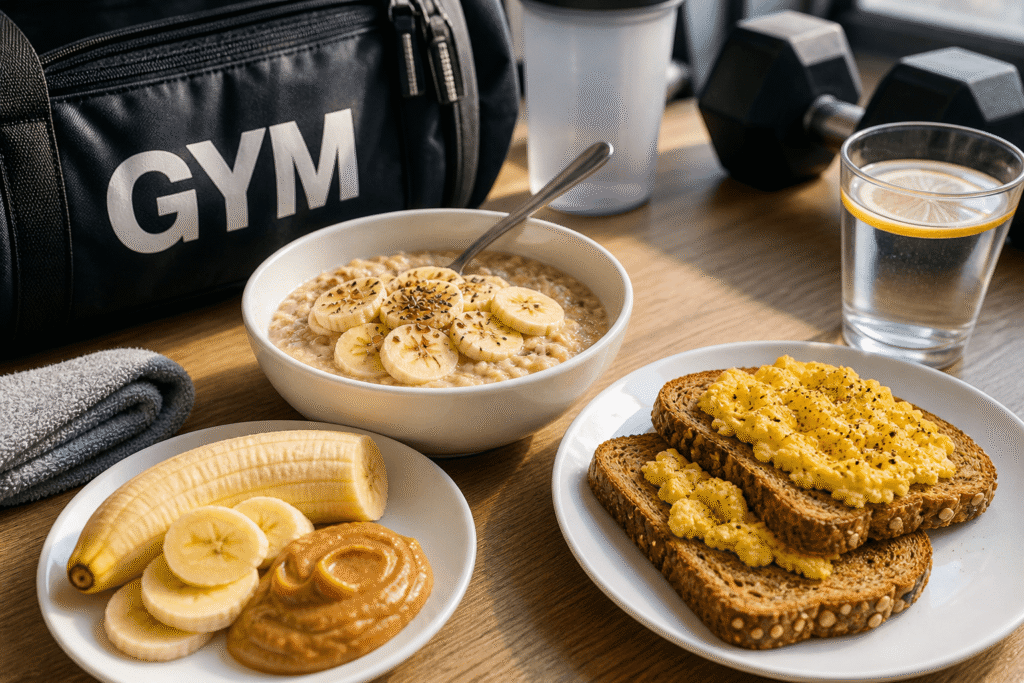
Best Pre-Workout Foods
- Banana with peanut butter
- Oats with milk
- Whole grain toast with eggs
- Fruit smoothie
These foods provide quick energy. They also help you train longer and harder.
In addition, carbohydrates before workouts improve endurance and overall performance.

What to Eat After a Workout
Post-workout nutrition is critical. This is when your body repairs and builds muscle.
Best Timing
Eat within 30 to 60 minutes after your workout.
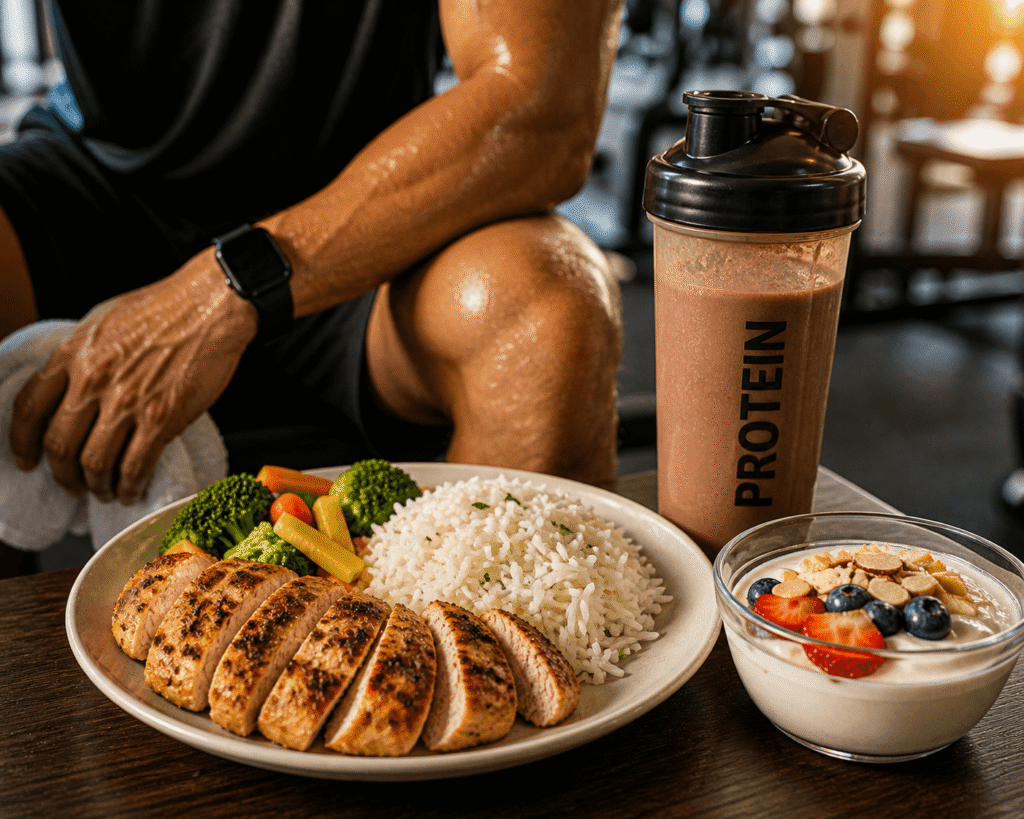
Best Post-Workout Foods
- Grilled chicken with rice
- Eggs with toast
- Protein shake with banana
- Greek yogurt with fruit
These meals help refill energy stores. They also support muscle recovery.
Research shows that combining protein and carbohydrates after exercise improves recovery and growth.
Key Foods to Include in Your Diet
To get the best results, focus on nutrient-dense foods.
High-Protein Foods
- Chicken, fish, eggs
- Lentils and beans
- Greek yogurt
Energy-Boosting Carbohydrates
- Brown rice and oats
- Whole grains
- Fruits
Healthy Fats
- Almonds and walnuts
- Flaxseeds
- Olive oil
Common Mistakes Beginners Should Avoid
Even a good diet plan can fail if you make these mistakes.
1. Skipping Meals
Skipping meals reduces energy and leads to overeating later.
2. Eating Too Little Protein
Without enough protein, muscle growth slows down.
3. Overeating Healthy Foods
Healthy foods still contain calories. Portion control matters.
4. Relying Only on Supplements
Supplements cannot replace whole foods. Focus on real meals first.
Do Not Ignore Hydration
Water plays a major role in performance and recovery.
It helps with:
- Nutrient transport
- Muscle function
- Energy levels
Daily Intake
Aim for 2.5 to 3.5 liters per day, depending on your activity level.
How to Customize This Diet Plan
Not every beginner has the same goal. You should adjust your diet based on your needs.
Based on Your Goal
- For fat loss, maintain a small calorie deficit
- For muscle gain, maintain a slight calorie surplus
Based on Your Body Type
- Fast metabolism requires more calories
- Slow metabolism requires portion control
Based on Your Routine
- Morning workouts need a strong breakfast
- Evening workouts require proper dinner timing
Diet Plan vs Other Popular Approaches
| Approach | Focus | Advantage | Limitation |
| 7-Day Diet Plan | Structured meals | Easy to follow | Requires planning |
| Intermittent fasting | Meal timing | Simple | Not ideal for everyone |
| Flexible dieting | Macro tracking | Flexible | Requires effort |
From a practical perspective, consistency matters more than the method you choose.
Simple Strategy for Long-Term Success
A 7-day plan is only the starting point. Long-term success depends on your habits.
Daily Habits
- Eat balanced meals
- Stay hydrated
- Follow consistent meal timing
Weekly Habits
- Plan your meals
- Track your progress
- Adjust portions when needed
Final Insight: Keep It Simple and Stay Consistent
The best diet for gym beginners is not about strict rules or complicated plans. It is about balance, timing, and consistency.
A 7-day diet plan gives you direction. However, real results come from following it regularly.
You do not need to be perfect. You just need to stay consistent.
Because in fitness, long-term habits always matter more than short-term effort.