
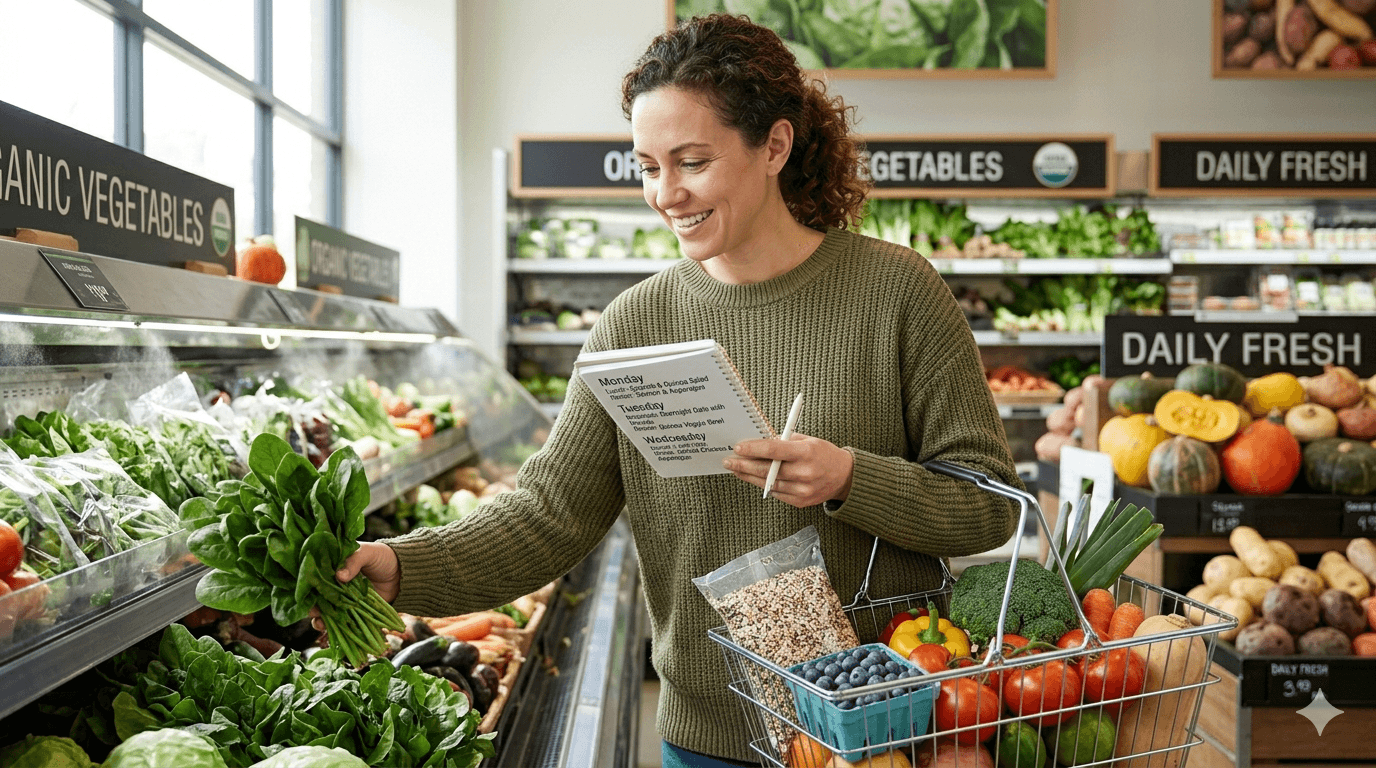
Meal planning is no longer just a trend. It is a practical system that helps you take control of your diet, reduce daily stress, and make healthier choices without overthinking every meal.
If you have ever struggled with last-minute food decisions, unhealthy takeout habits, or wasted groceries, Food Planning offers a structured solution. But here is the catch. Many beginners over complicate it, which leads to inconsistency and burnout.
So what actually works? And how can you start meal planning in a way that is simple, sustainable, and effective?
Let’s break it down step by step.
Meal Planning for Beginners: A Practical System That Actually Works
At its core, Food Planning is the process of deciding what you will eat in advance. This can be done for a few days or an entire week.
According to nutrition guidance and lifestyle experts, people who plan meals tend to:
- Eat more balanced diets
- Reduce food waste
- Save both time and money
- Avoid impulsive eating decisions
From a practical perspective, Food Planning is less about perfection and more about consistency. The goal is to simplify your routine, not complicate it.
Why Meal Planning Is So Effective
1. It Reduces Decision Fatigue
Making food decisions multiple times a day can be mentally exhausting. Planning ahead eliminates this burden.
2. It Improves Diet Quality
When meals are planned, you are more likely to include:
- Vegetables
- Lean proteins
- Whole grains
3. It Saves Time During the Week
Instead of cooking daily from scratch, you batch tasks like chopping, cooking, or portioning.
4. It Helps Control Portions
Pre-planned meals reduce overeating and support weight management goals.
From a broader perspective, Food Planning acts as a system that aligns your eating habits with your long-term goals.
Step-by-Step Guide to Meal Planning for Beginners
Step 1: Start Small and Keep It Simple
One of the biggest mistakes beginners make is planning every meal for the entire week.
Instead:
- Plan 3 to 4 days only
- Focus on lunches or dinners first
- Repeat meals if needed
Consistency matters more than variety in the beginning.
Step 2: Choose Easy and Familiar Recipes
Stick with meals you already know or simple recipes with few ingredients.
Good beginner options:
- Grilled chicken with vegetables
- Rice bowls with protein and greens
- Pasta with lean protein and sauce
This reduces overwhelm and increases the likelihood that you will stick to your plan.
Step 3: Create a Structured Grocery List
Once meals are selected, list all ingredients you need.
Organize your list by category:
- Proteins
- Vegetables
- Grains
- Pantry items
This makes shopping faster and prevents unnecessary purchases.
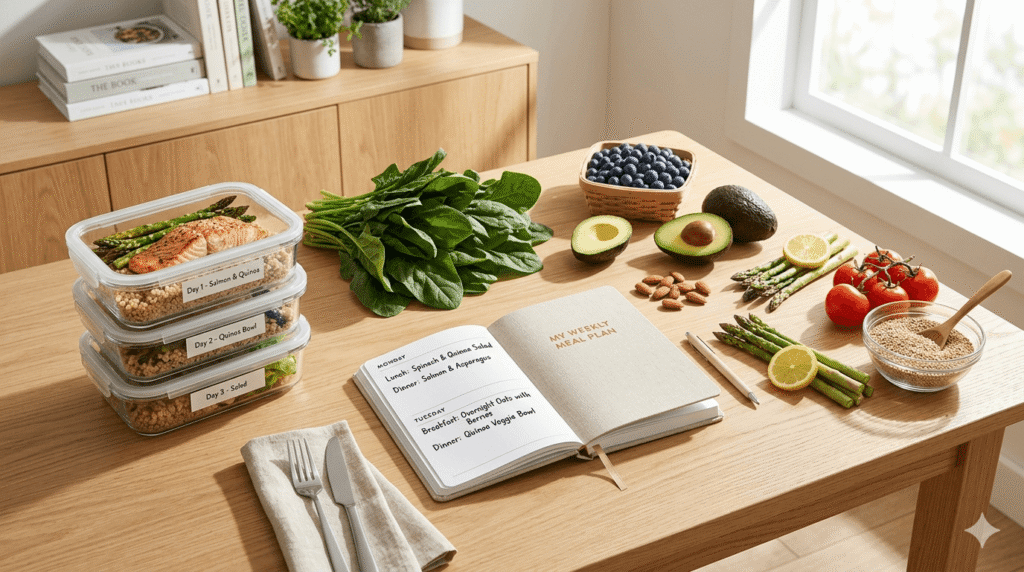
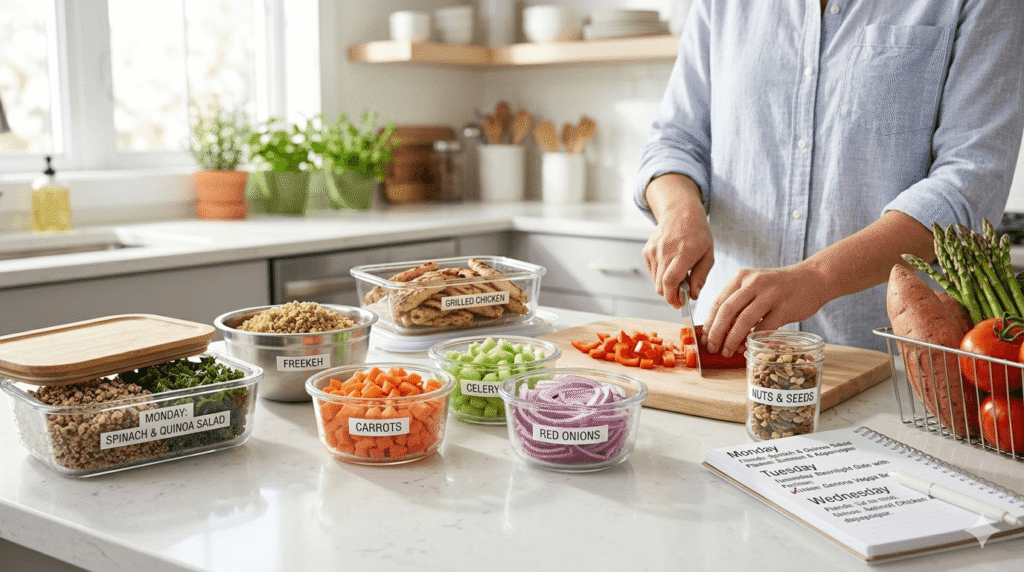
Step 4: Prep Ingredients in Advance
Meal prep does not always mean cooking everything.
You can:
- Chop vegetables
- Cook grains in bulk
- Marinate proteins
Even small preparation steps can significantly reduce cooking time during the week.
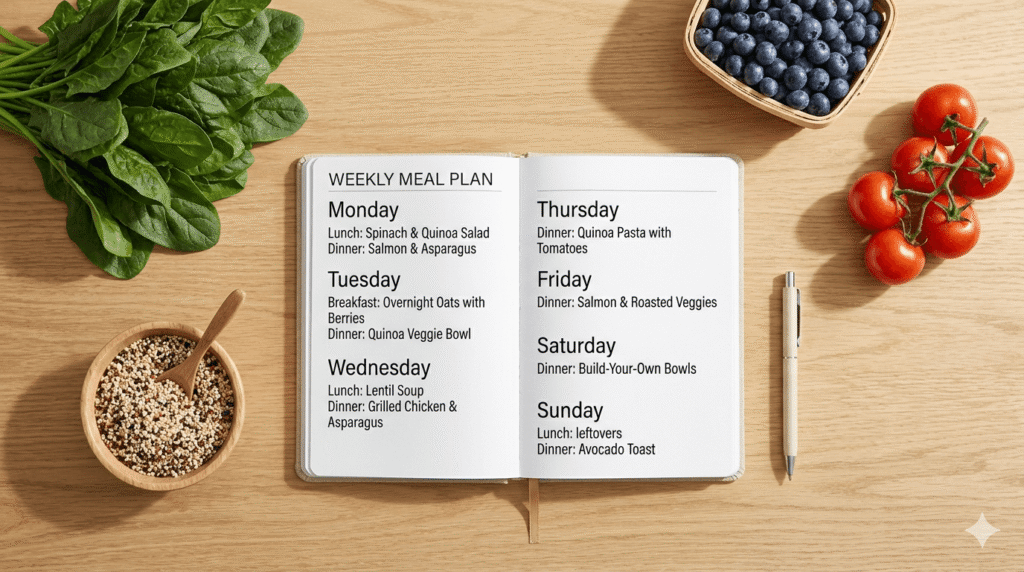
Step 5: Schedule Your Meals
Assign meals to specific days.
Example:
- Monday: Chicken and vegetables
- Tuesday: Rice bowl
- Wednesday: Pasta
This removes daily guesswork and keeps you consistent.
Step 6: Stay Flexible
Meal planning is a guide, not a strict rulebook.
If plans change:
- Swap meals between days
- Use leftovers creatively
- Adjust portions based on hunger
Flexibility is what makes Food Planning sustainable.
Example Weekly Meal Planning Framework
| Day | Meal Idea | Prep Level |
| Monday | Grilled chicken + vegetables | Medium |
| Tuesday | Rice bowl with beans and greens | Low |
| Wednesday | Pasta with lean protein | Medium |
| Thursday | Leftovers or quick stir-fry | Low |
This type of structure simplifies your week without requiring excessive effort.
Common Mistakes Beginners Should Avoid
Overplanning Everything
Trying to plan every meal for 7 days often leads to burnout.
Choosing Complex Recipes
Complicated meals increase prep time and reduce consistency.
Ignoring Personal Preferences
If you do not enjoy the food, you will not stick to the plan.
Not Accounting for Real Life
Unexpected events happen. Plans should be adaptable.
From a realistic standpoint, successful Food Planning is about building habits, not achieving perfection.
Tools That Make Meal Planning Easier
While Food Planning can be done manually, certain tools can improve efficiency:
- Weekly planners or notebooks
- Meal prep containers
- Digital grocery apps
- Recipe management apps
These tools help streamline the process and reduce friction.
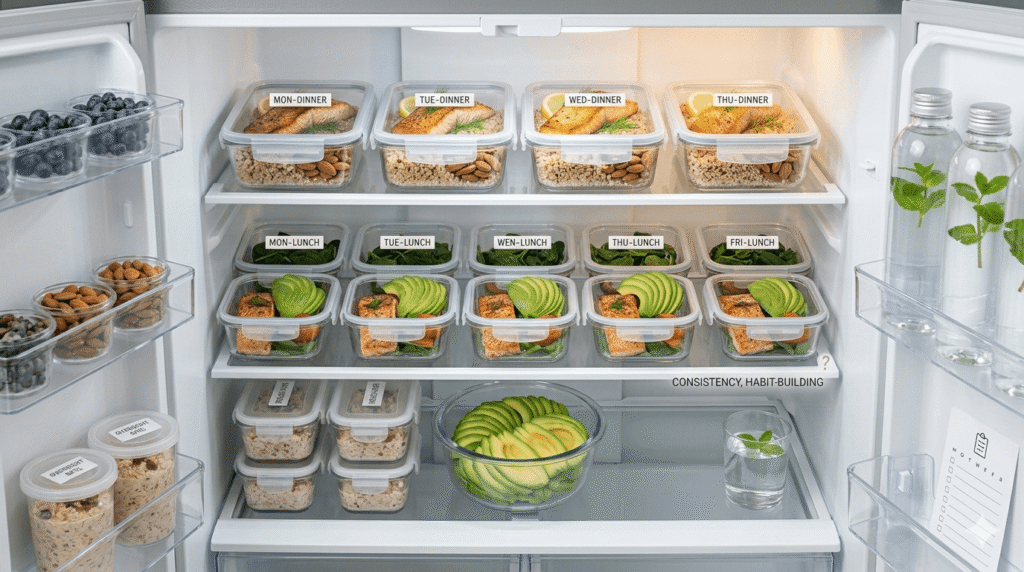
How Meal Planning Supports Long-Term Consistency
From a behavioral perspective, meal planning works because it creates structure.
Instead of relying on motivation, you rely on a system.
Key long-term benefits include:
- Better adherence to healthy eating
- Reduced stress around food decisions
- Improved time management
- More predictable eating habits
According to dietary behavior insights, structured routines are more sustainable than spontaneous decision-making.
Meal Planning vs Meal Prep: What’s the Difference?
| Aspect | Meal Planning | Meal Prep |
| Focus | Deciding meals in advance | Preparing food ahead |
| Time Investment | Low to moderate | Moderate to high |
| Flexibility | High | Medium |
| Goal | Organization | Convenience |
Both approaches work best when combined.

Is Meal Planning Right for Everyone?
Meal planning is highly effective, but it may look different for each person.
It Works Best If You:
- Have a busy schedule
- Want to eat healthier
- Struggle with consistency
It May Be Challenging If You:
- Prefer spontaneous eating
- Have unpredictable routines
- Do not enjoy structured systems
That said, even partial meal planning can deliver benefits.
Final Perspective: Keep It Simple, Stay Consistent
Meal planning is not about creating the perfect weekly menu. It is about building a system that works for your lifestyle.
From a practical point of view, the most effective approach includes:
- Starting small
- Keeping meals simple
- Staying flexible
- Focusing on consistency over perfection
The real advantage of meal planning is not just saving time or eating healthier. It is reducing daily friction and making better choices automatic.
When done right, meal planning becomes less of a task and more of a long-term strategy for maintaining a balanced and sustainable lifestyle.