

Low calorie meals are becoming one of the most effective and sustainable strategies for weight loss in 2026. Instead of extreme dieting or cutting entire food groups, this approach focuses on eating fewer calories while still maintaining proper nutrition.
But here is the key insight. Not all low calorie meals are created equal. Some help you stay full, energized, and healthy. Others can leave you hungry, fatigued, and more likely to quit.
So how do you build meals that are both low in calories and high in nutritional value? And how can you use them effectively for long-term weight loss?
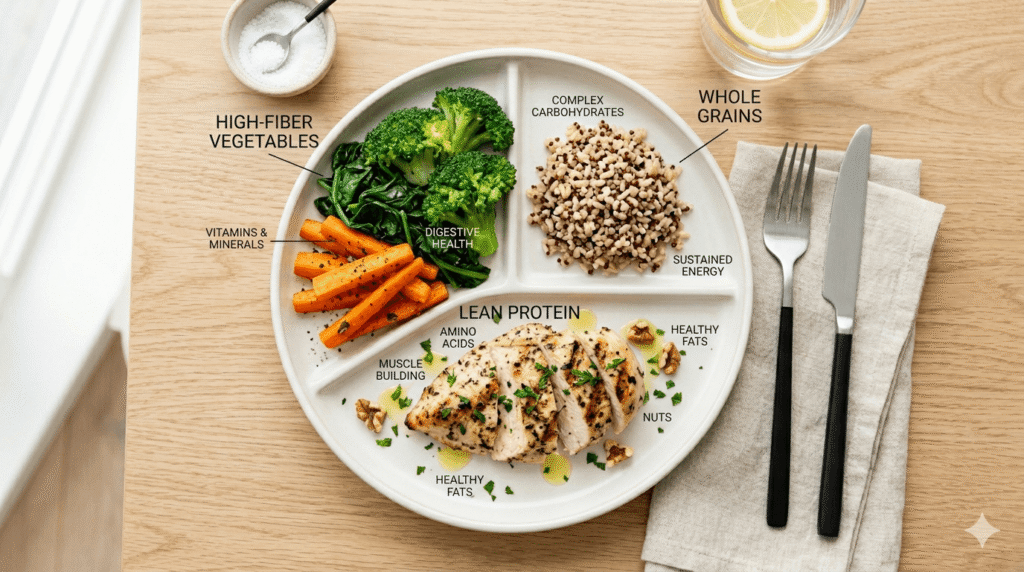
Low Calorie Meals Explained, How They Work and Why They Matter
At a basic level, low calorie meals help create a calorie deficit, which is essential for weight loss.
The Science Behind Low Calorie Eating
Weight loss occurs when your body burns more calories than it consumes. By reducing calorie intake through structured meals:
- The body begins using stored fat for energy
- Overall energy balance shifts toward fat loss
- Gradual weight reduction becomes possible
According to nutrition research, a moderate calorie deficit supports sustainable weight loss without extreme restriction.
What Makes a Meal Low Calorie
A typical low calorie meal usually ranges between:
- 300 to 600 calories per meal, depending on individual needs
However, calorie count alone is not enough. Quality matters just as much.
Key Components of Effective Low Calorie Meals
To be successful, low calorie meals must balance nutrients, not just reduce calories.
1. High Protein Content
Protein helps:
- Increase satiety
- Preserve muscle mass
- Reduce overall calorie intake
Examples include chicken, fish, eggs, tofu, and legumes.
2. High Fiber Foods
Fiber slows digestion and keeps you full longer.
Include:
- Vegetables
- Fruits
- Whole grains
3. Healthy Fats in Moderation
Healthy fats support hormone function and satisfaction.
Sources include:
- Nuts
- Seeds
- Olive oil
4. Low Energy Density Foods
Foods with fewer calories per volume allow you to eat more without overeating.
Examples:
- Leafy greens
- Broccoli
- Zucchini
Easy Low Calorie Meal Ideas You Can Try
Creating low calorie meals does not have to be complicated. Simple combinations can be both nutritious and satisfying.
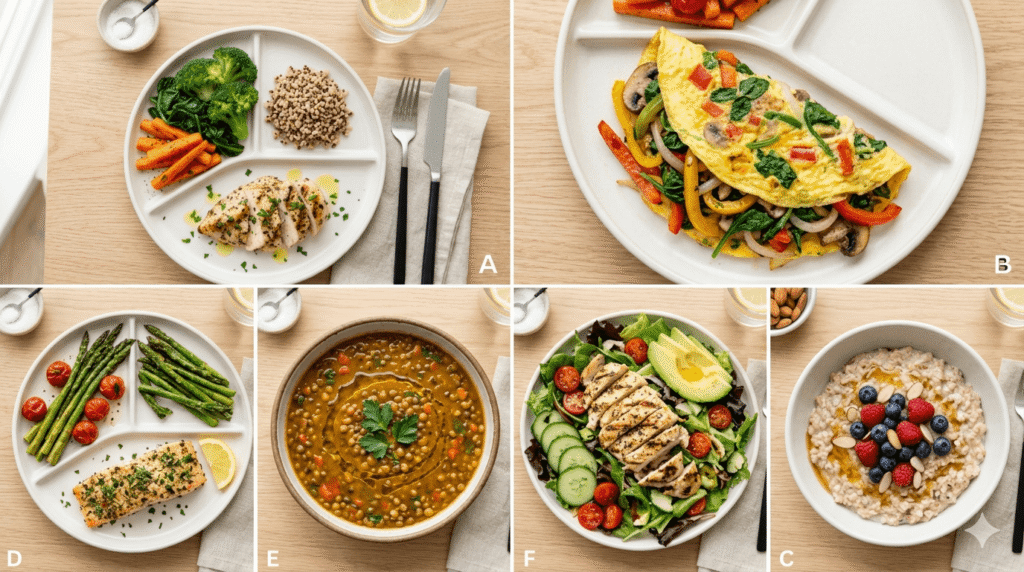
Breakfast Ideas
- Vegetable omelet with spinach and tomatoes
- Oatmeal with berries and a small portion of nuts
- Greek yogurt with fruit
Lunch Ideas
- Grilled chicken salad with mixed greens and olive oil dressing
- Lentil soup with vegetables
- Whole grain wrap with lean protein and vegetables
Dinner Ideas
- Zucchini noodles with grilled chicken or shrimp
- Stir-fried vegetables with tofu
- Baked fish with roasted vegetables
Snack Options
- Apple slices with cinnamon
- Carrot sticks with hummus
- Boiled eggs
Sample Balanced Low Calorie Meal Plan
Here is a realistic daily structure:
| Meal | Example | Approx Calories |
| Breakfast | Oatmeal with berries | 300 |
| Lunch | Grilled chicken salad | 400 |
| Dinner | Fish with vegetables | 500 |
| Snacks | Fruit and nuts | 200 |
This approach keeps total intake controlled while ensuring proper nutrition.
Benefits of Low Calorie Meals
When done correctly, low calorie meals offer multiple advantages.
1. Sustainable Weight Loss
Encourages gradual fat loss rather than rapid, unsustainable changes.
2. Better Portion Control
Helps build awareness of serving sizes and eating habits.
3. Improved Nutritional Quality
Focus on whole foods leads to better intake of essential nutrients.
4. Flexibility in Food Choices
Can be adapted to different cuisines and preferences.
Common Mistakes to Avoid
Even though the concept is simple, mistakes can reduce effectiveness.
1. Cutting Calories Too Much
Extreme restriction can lead to:
- Fatigue
- Muscle loss
- Slower metabolism
2. Ignoring Nutritional Balance
Low calorie does not mean low nutrition.
Meals lacking protein or fiber may increase hunger.
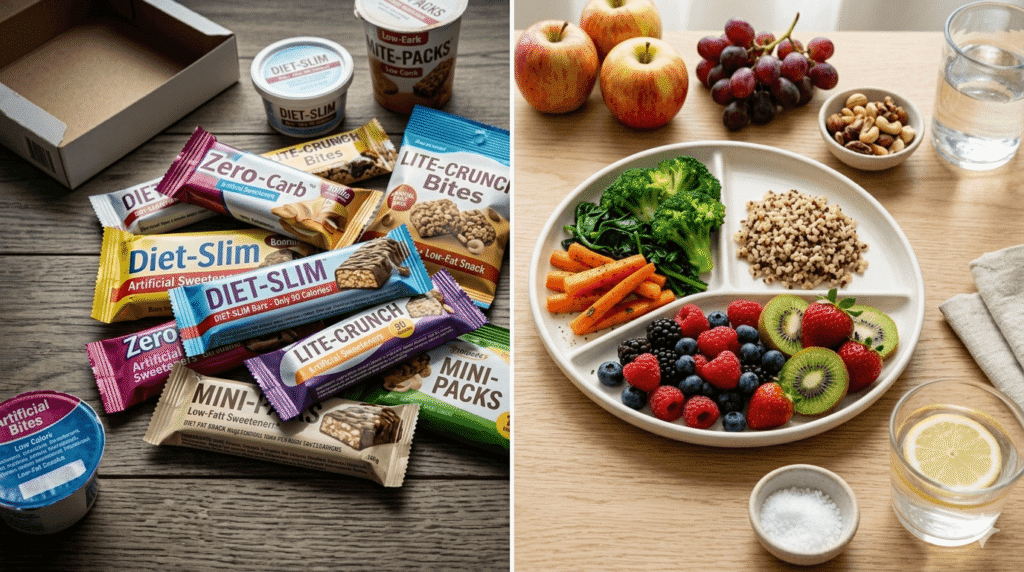
3. Relying on Processed Diet Foods
Many low-calorie packaged foods contain:
- Added sugars
- Artificial ingredients
These can undermine weight loss goals.
4. Skipping Meals
Skipping meals often leads to overeating later in the day.
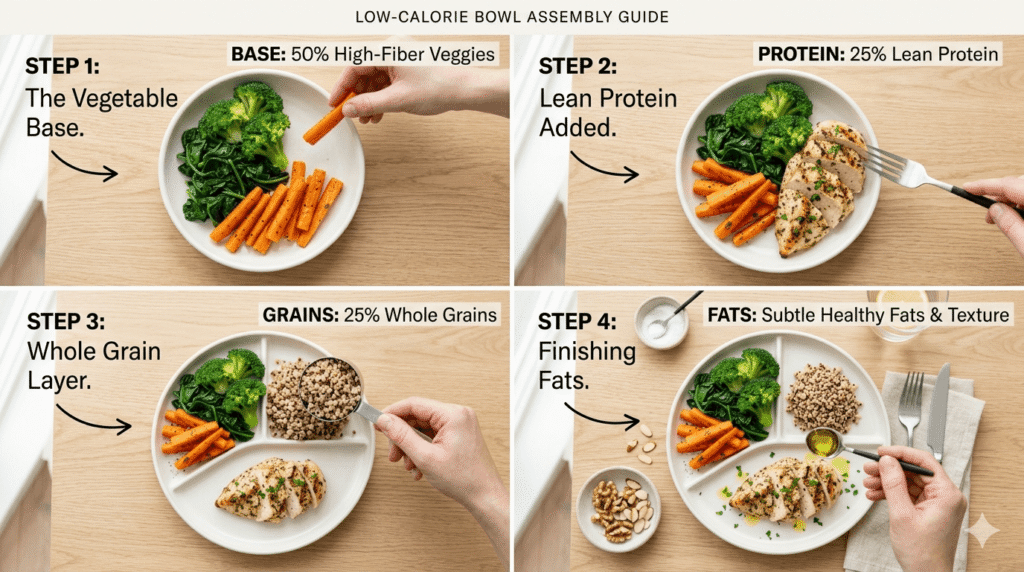
How to Build Low Calorie Meals Step by Step
A structured approach makes it easier to stay consistent.
Step 1. Start With Protein
Choose a lean protein source as the base.
Step 2. Add Vegetables
Fill half your plate with vegetables for volume and nutrients.
Step 3. Include Whole Carbohydrates
Add moderate portions of whole grains or starchy vegetables.
Step 4. Add Healthy Fats
Use small amounts for flavor and balance.
Step 5. Control Portions
Be mindful of serving sizes to maintain calorie targets.
Low Calorie Meals vs Other Diet Approaches
| Approach | Focus | Advantage | Limitation |
| Low calorie meals | Calorie reduction | Flexible and effective | Requires planning |
| Keto diet | Low carb | Rapid results | Restrictive |
| Intermittent fasting | Meal timing | Simple structure | Not for everyone |
From a research perspective, consistency matters more than the specific diet method.
Practical Strategy for Long-Term Success
Daily Habits
- Plan meals in advance
- Focus on whole, unprocessed foods
- Stay hydrated
Weekly Approach
- Track calorie intake
- Adjust portions if needed
- Maintain consistency
Final Perspective, Smart Eating Beats Extreme Dieting
The rise of low calorie meals reflects a shift toward more practical and sustainable weight loss strategies.
Rather than focusing on strict rules or short-term fixes, this approach encourages balance, portion control, and better food choices. When done correctly, low calorie meals can support steady progress, improved health, and long-term success without unnecessary restriction.